

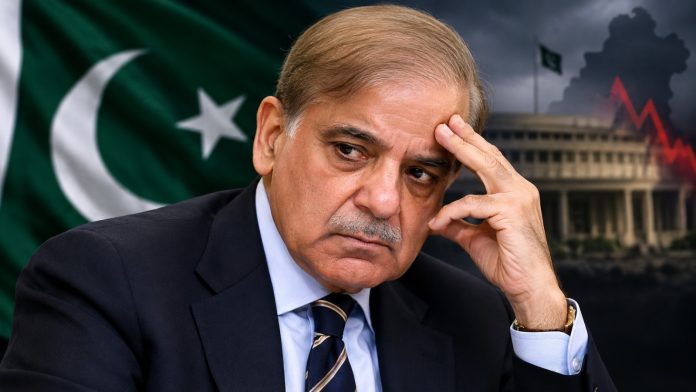
Prime Minister Shehbaz Sharif chose his words with care when he addressed the UN General Assembly on 25 September. Any threat to the sanctity of Mecca and Medina, he said, was a red line that must never be crossed. He described the Houthi attack that Saudi Arabia says targeted Mecca as one that outraged Muslims across the globe. The Houthis, who have claimed strikes on Saudi military and energy sites, have not acknowledged aiming at the holy cities. The three pact members, Saudi Arabia, Pakistan and Turkey, are Sunni-majority states. The Houthis are a Shia movement, of the Zaydi branch, and are aligned with Shia-majority Iran. The holy-cities language therefore lands on a sectarian fault line, even though no signatory has used sectarian terms.
The language belongs to the oldest strand of the Saudi-Pakistani relationship, whose defence ties reach back decades, in part because of Islamabad’s willingness to defend Mecca and Medina. It surfaced again on 2 October, when Pakistan’s top military commanders condemned the Houthi attacks and expressed commitment to the security of Islam’s holy sites, Reuters reported. It surfaced on 5 October in the joint statement of the three pact members, which condemned attacks on the kingdom, in particular those aimed at Mecca and Medina, without naming the Houthis. The choice matters. A statement naming a militia invites a response to a militia, while one describing attacks on holy sites invites a response framed as defence. It also invites a confessional reading: a Sunni bloc defending Sunni Islam’s holiest sites against a Shia-aligned force.
That framing coincides with the line Tehran has itself drawn. Javad Heiran-Nia of the Persian Gulf Studies Group in Tehran says Iran distinguishes between the defence of Saudi territory and infrastructure and offensive operations against the Houthis in Yemen. The defence of the holy cities falls on the permitted side of that distinction, which may explain why Pakistani officials keep returning to it. For Tehran, the sectarian symmetry is hard to miss: three Sunni-majority powers, one Shia-majority neighbour, and a Shia ally under fire in Yemen.
The language also sets a standard against which later conduct will be measured. Defence Minister Khawaja Asif said on 5 October that Pakistan’s role was supportive, with reconnaissance, and that only Saudi forces were in combat. That fits the vocabulary of defence. A part in the Yemeni government’s counteroffensive would not. Iran has confined its objections to Yemen and has not disputed the sanctity of the holy cities.
Turkey phrases its own promise differently. Erdogan told Newsweek that support could include intelligence, logistics or ammunition, with more extensive military assistance possible depending on the scale of the threat. That puts the holy-cities argument on a sliding scale of response, a narrower undertaking than the vocabulary of red lines implies. Saudi Defence Minister Prince Khalid bin Salman, announcing the activation on 5 October, likewise spoke of confronting heinous attacks against the kingdom and its holy sites.
Pakistan’s domestic politics are part of the calculation. When Saudi Arabia asked Islamabad in 2015 for fighter jets, ground troops and warships for its Yemen campaign, analysts described Pakistan as balancing its Saudi alliance against the risk of souring relations with Iran and inflaming sectarian tensions at home. Pakistan has a substantial Shia minority and a long record of Sunni-Shia violence, which gives Islamabad every reason to keep its commitments in the language of holy sites and territorial defence rather than sect. The parliamentary refusal that followed is the documented outcome: Islamabad rejected joining the Saudi-led war effort after its parliament opposed the deployment.
The Houthis have heard the argument and dismissed it. They called the pact cosmetic when it was signed, and their commentary since activation has largely assumed that Pakistan and Turkey will not join the war directly. Official Mohammed Al-Bukhaiti has warned that any deployment in support of Riyadh would meet retaliation.
The vocabulary of the holy cities performs three tasks at once. It explains the pact to Pakistan’s public, describes a deployment Iran has said it can tolerate, and sets a test that wider involvement in Yemen would fail. It also leaves the sectarian reading open to anyone who wants to make it, in Tehran, in Sanaa or in the Gulf’s own press. Tehran’s response so far is the spokesman’s hope, stated on 4 October, that the reports of deployment are untrue.
