

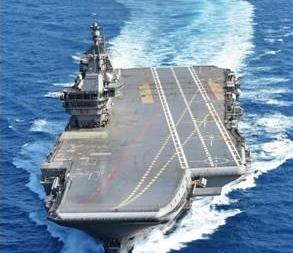
Few pieces of military hardware carry as much political weight as the aircraft carrier. A carrier strike group is not simply a collection of ships and aircraft; it is a mobile, sovereign piece of national territory that can appear off any coast in the world, project airpower without seeking a foreign base or overflight clearance, and be withdrawn just as quickly once its political purpose has been served. This flexibility is precisely why carriers have become the currency of great-power signalling in the modern era.
The Logic of Carrier Diplomacy
When a crisis erupts, the first question asked in Washington is famously said to be: “Where are the carriers?” The reason is simple. Land-based airpower requires basing rights, transit agreements, and the cooperation of third countries — all of which can evaporate at the moment they are most needed. A carrier answers to none of these constraints. It can loiter in international waters for weeks, surge forward to signal resolve, or quietly withdraw to lower the temperature, all without a single shot being fired.
This is coercive diplomacy in its purest form: the ability to communicate intent and capability simultaneously, backed by credible force, without crossing the threshold into war. The presence of a carrier group near a contested strait or a flashpoint coastline changes the calculus of every actor watching, from allied capitals reassured by the sight of the ship to adversaries who must now factor a highly capable strike package into their planning.
Symbols of Resolve
History offers repeated illustrations of this dynamic. Carriers have been dispatched to the Taiwan Strait, the Eastern Mediterranean, and the waters off the Korean Peninsula not necessarily to fight, but to be seen — to communicate that a nation’s commitments are backed by something more tangible than statements. The ship itself becomes the message. Unlike a diplomatic cable or a press briefing, a carrier’s movement is unambiguous, visible on satellite imagery and radar alike, and impossible to dismiss as rhetoric.
This symbolic function matters as much to allies as it does to adversaries. A carrier’s presence reassures partners that a commitment will be honoured, at a moment when words alone might not suffice.
Why Every Major Maritime Power Pursues Carriers
It is no accident that the community of carrier-operating nations, though small, includes virtually every state with serious global or regional ambitions. The United States, the United Kingdom, France, Russia, China, and now India have each judged that a navy without organic air cover is a navy confined to operating under someone else’s air umbrella — or not operating far from home at all. Carriers extend the reach of every other platform in a fleet: they provide air defence for surface groups, strike capability independent of land bases, and the ability to establish local air superiority wherever the fleet chooses to operate.
For rising and established powers alike, the carrier has therefore become something closer to a threshold capability — a marker that separates navies capable of shaping events on the high seas from those limited to coastal defence.
Implications for India’s Indo-Pacific Aspirations
India’s own trajectory illustrates this logic clearly. As New Delhi seeks to be recognised as a leading power in the Indo-Pacific rather than merely a regional one, the ability to deploy credible, sustained airpower across the wider Indian Ocean Region becomes indispensable. A carrier battle group gives India the means to reassure partners from the Gulf to Southeast Asia, to respond to crises without depending on foreign basing, and to be present — visibly and continuously — in waters that are central to the country’s economic and strategic future.
In an era where influence is measured as much by presence as by treaties, the aircraft carrier remains one of the few instruments capable of converting national ambition into demonstrable, day-to-day reality on the world’s oceans. For a country with India’s scale of interests, that capability is not a luxury; it is the foundation on which credible Indo-Pacific leadership will be built.
